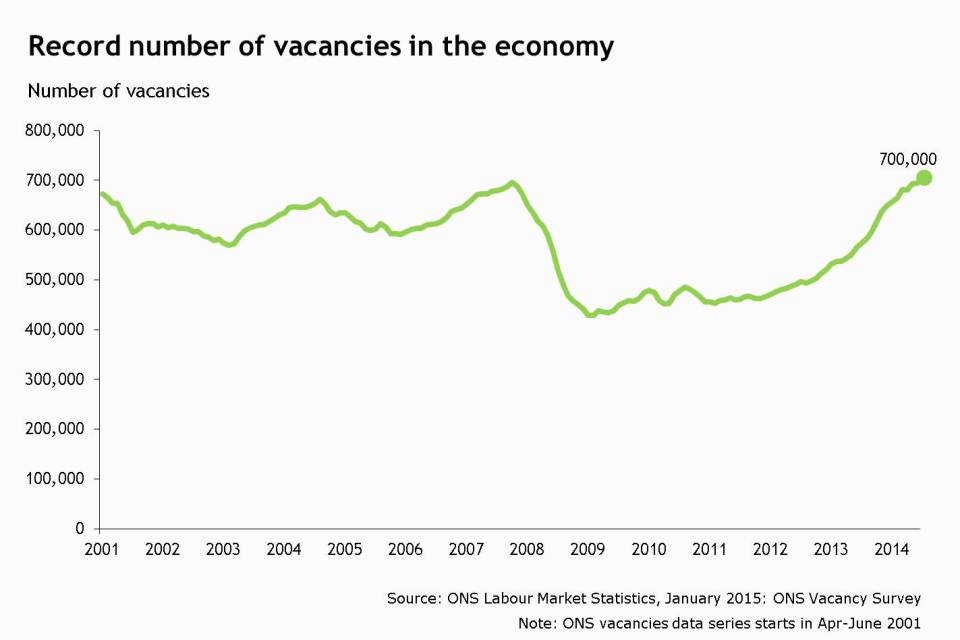
In a further sign of the strength of the UK labour market, today’s independent figures show that job vacancies have risen by 127,000 to hit a 14-year record high. There are around 700,000 job opportunities across the country, showing that the government’s long-term economic plan to back businesses and create jobs is working.
Wages are also increasing above the cost of living, meaning more money in people’s pockets. Today’s figures from the Office for National Statistics show that regular pay was up 1.8 percent and private sector pay was up 2.2 percent, well ahead of the inflation rate.
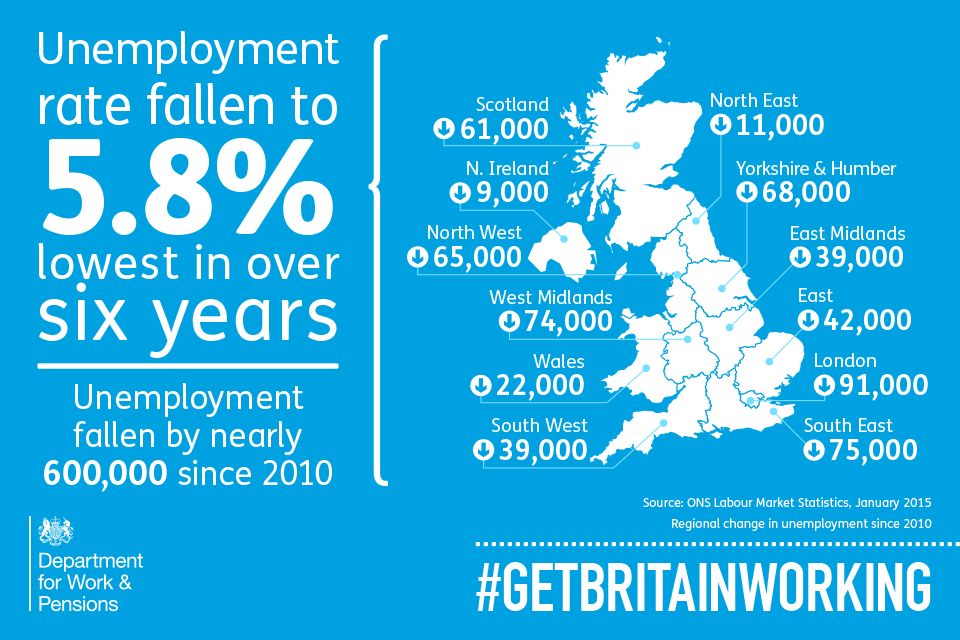
The total number of people without a job has fallen by nearly one million since 2010.
Work and Pensions Secretary Iain Duncan Smith said:

“We have reached an important milestone in this country’s jobs-led recovery – with unemployment falling below six percent for the first time in six years. Welfare reform has played an instrumental part in this.
“We know that British people want to work hard and get on, but all too often in the past the welfare state hindered rather than helped thwarting ambition and killing off hope. We put an end to that and now the number of people claiming the main out-of-work benefits is the lowest for a generation, and there are record numbers of people in work.
“Thanks to our long-term economic plan, businesses are feeling confident about the future. Jobs are being created and salaries are rising, meaning that increasing numbers of people are feeling the security and hope for the future that comes with a regular wage.”
Overall employment figures:
- record 30.8 million people in work
- number of women in work and female employment rate both at record highs: 14.4 million and 68.2 percent
- employment rate 73 percent – the same as the peak in early 2008 before the recession
- unemployment rate 5.8 percent – lowest since June to August 2008
- vacancies 700,000 – rising by 127,000 in the last year alone
Employment
The number of people in jobs increased by more that half a million over the last year – averaging over 1,400 every day – to a record 30.8 million. Over 80 percent of the annual rise is in full-time employment, while the number of people working part-time, but who want to work full-time, fell by 125,000.
Unemployment
There are 418,000 fewer unemployed people than a year ago. Schemes like the government’s Work Programme has contributed to the number of long-term unemployed people falling to the lowest level in five years, while those out of work for more than two years has seen the biggest annual fall in over 16 years.
Claimant count
The number of people claiming Jobseeker’s Allowance has now been falling for the last 26 months and is below 900,000 – the lowest level since June 2008. This is down over 25,000 on the month and down over 350,000 on the year.
Today’s figures also include details of claims for Universal Credit, which is in almost 100 Jobcentres and will shortly be rolled out across the country. Since it began, almost 55,000 people have made a claim for Universal Credit, and in December there were 26,940 people claiming the in and out of work benefit, around a third of whom were in employment.
Young people
Youth unemployment has fallen by 171,000 compared to this time last year. Excluding those in full-time education, there are now 520,000 unemployed young people. The number of young people claiming Jobseeker’s Allowance has fallen every single month for the past three years, and is at the lowest since the 1970s.
International comparisons
The annual increase in the UK employment level is the largest of all EUcountries. Over the past year, the UK has seen the strongest employment rate growth in the G7 – better than the United States, Japan, Canada and France. The UK has also seen the largest annual fall in the unemployment rate in the G7.
Supporting people into work
The Department for Work and Pensions (DWP) offers a range of support across the country to get people off benefits and into jobs through our network of over 700 Jobcentres. These include work experience, employer-led training, work placements, skills training, the Work Programme, and help for budding entrepreneurs through the New Enterprise Allowance.
DWP has also introduced the Claimant Commitment in all British jobcentres – it is a more rigorous commitment for benefit claimants based on the person’s individual circumstances and clearly sets out what their responsibilities are while job hunting. New figures show that more than a million jobseekers have now signed the commitment.

Steff joined the HRreview editorial team in November 2014. A former event coordinator and manager, Steff has spent several years working in online journalism. She is a graduate of Middlessex University with a BA in Television Production and will complete a Master's degree in Journalism from the University of Westminster in the summer of 2015.
- Steff Humm

- Steff Humm
- Steff Humm
- Steff Humm