


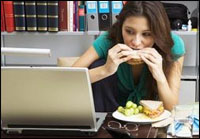
 Research from the forthcoming Aviva Health of the Workplace report has found UK workers’ eating habits are suffering due to stress.
Although employees and bosses recognise the value of taking a lunch break for wellbeing, longer hours and workplace pressures are stopping staff from taking the breaks they need.
Significant barriers to taking a daily break remain, particularly when workers are under pressure. Nearly a third (30%) of employees say they are unlikely to take a lunch break, only a marginal improvement on the 37% who gave the same response in 2009.
A quarter (25%) will only take a lunch break if they feel their workload allows it, while 13% of employees skip meals in the workplace altogether. For some employees, stress results in other poor dietary habits, with 19% claiming they overeat at work. To help encourage better eating habits in the workplace Aviva has produced an online guide to healthy lunches. This can be downloaded at www.aviva.co.uk/healthoftheworkplace

Aviva also found that employers do recognise the importance of lunch breaks and eating well. Nearly half (43%) of workers are encouraged to take a lunch break as employers recognise the value of a good work/life balance.
Although it seems that for many, food options in the workplace are somewhat limited. Of those employers who offer food in the workplace (45%), over a third (38%) mainly offer unhealthy options. As a result, employees try to keep themselves healthy with over a third (35%) stating they try to eat healthy food and 30% usually bringing in their own healthy lunches.
Health and eating well suffer when workloads are high. As a result of longer working hours, nearly 15% of employees believe their health is affected because they are eating unhealthily at work.
Dr Doug Wright, head of clinical development, Aviva UK Health says:
“It’s well documented that eating more healthily can improve general wellbeing and life expectancy, so there are countless benefits to adopting this approach in the workplace. It’s also important for people to take a break from their desks where possible as this can help improve both morale and efficiency for employees.
“Employers can help by offering healthy food options to support and encourage their staff to eat well, and by removing those barriers that still exist to taking a proper lunch break. Employees too need to break the habit of skipping lunch or eating at their desks. A cultural shift in the workplace towards proper lunch breaks will improve overall employee wellbeing as well as productivity.”
The Aviva Health of the Workplace report canvassed the views of employers and their staff on issues relating to workplace wellbeing. The results provide a snapshot of current issues and concerns relating to health in workplaces around the UK. The full report will be published by Aviva in September 2011.




