

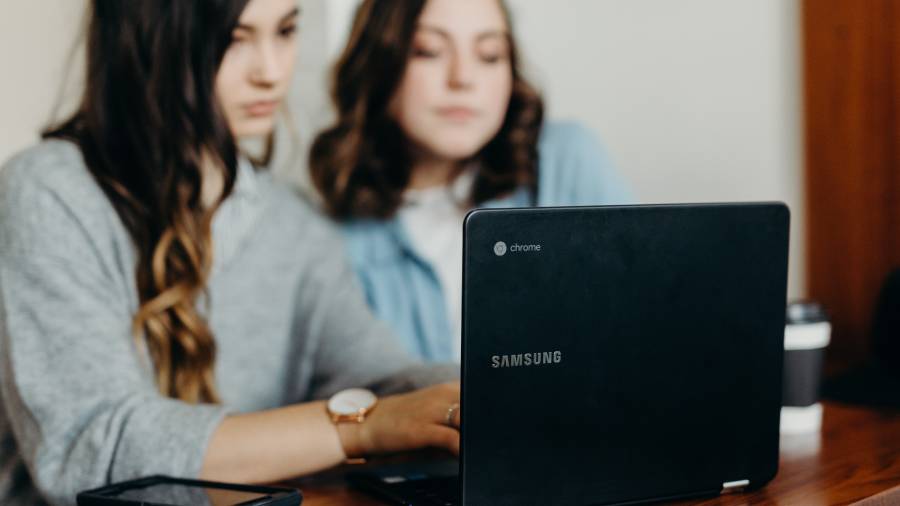
Young professionals and students have been shown to feel far greater concern about the rise of remote working than their senior counterparts.
A new report released by Universum indicates that a potential remote-working “leadership gap” could contribute to future skills shortages as junior and senior professionals have vastly different views on being out of the office.
The number of senior professionals with no concerns about working remotely was shown to be almost double that of younger workers (23 per cent vs 12 per cent).
In particular, professionals from a younger age bracket had fears about isolation (57 per cent), feeling this would cause them to miss out on social connections with co-workers.

This is compared to just two-fifths (40 per cent) of senior professionals.
Remote working was also considered to cause problems for young workers due to the potential of being left out of important meetings (38 per cent), facing difficulties with onboarding into new jobs and roles and employers being biased towards in person workers.
As such, current students indicated they would be twice as inclined to reject a job offer which was fully remote, compared to senior professionals.
Future earnings were also considered to be an area which could be impacted by remote working.
Where established senior professionals were less concerned (only 19 per cent) that remote working would negatively impact their take home, some 30 per cent of young people believe that working from home will reduce their earning potential.
An imminent skills gap could also face businesses in the coming years with just over half of young professionals feeling they have the appropriate skills to complete their job (57 per cent).
The findings suggest that without the ability to bounce questions or receive casual, real-time feedback, young people are missing a key feedback loop that senior professionals haven’t identified as being a priority.
Universum’s UK Director, Steve Ward said:
Our report shows just how important it is that employers strike the right balance in structuring their working week and how valuable an effective hybrid model can be, not just in meeting staff needs today, but also in developing the talent of tomorrow.
The experience of working from home is dramatically different depending on where you’re at in your career.
While senior professionals have benefited from established connections in the workplace, and higher levels of confidence in their ability to do their jobs, junior professionals have been reminded of the lack of networking opportunities, learning and development opportunities and ultimately, feeling less confident in themselves without the leadership shown to them in a physical workplace.
In understanding the concerns raised by the younger workforce around remote working and their confidence in their ability to do their jobs, decision makers and industry leaders can better tailor their return solutions to ensure happiness, productivity and success.
*Universum surveyed 18,000 people in the UK to obtain these results.

Monica Sharma is an English Literature graduate from the University of Warwick. As Editor for HRreview, her particular interests in HR include issues concerning diversity, employment law and wellbeing in the workplace. Alongside this, she has written for student publications in both England and Canada. Monica has also presented her academic work concerning the relationship between legal systems, sexual harassment and racism at a university conference at the University of Western Ontario, Canada.
- Monica Sharma

- Monica Sharma
- Monica Sharma
- Monica Sharma








