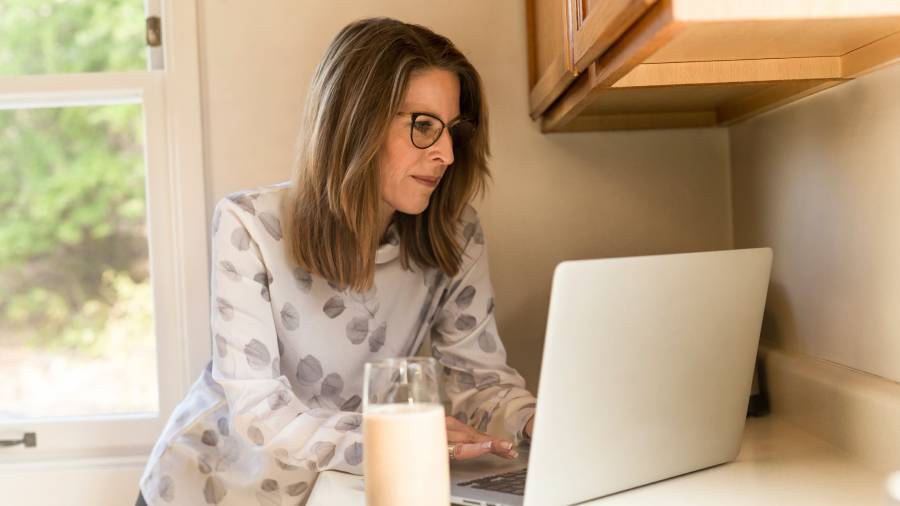
Almost two-thirds of working women surveyed state they are looking for an improved work-life balance when it comes to their job.
Over three in five working women in the UK (62 per cent) are looking for better work-life balance in their careers, according to new research announced today by Karren Brady’s Women in Business & Tech Expo.
This proved to be a priority for most women with over half (59 per cent) stating that a good work-life balance trumps salary in terms of importance.
For more than one in three women (38 per cent), the pandemic has changed the way they feel above their careers with one in seven (15 per cent) now feeling more negative about their role.

As such, this has prompted many to start a new job or plan on moving into a career (37 per cent).
The top considerations for women looking to move into a new role include flexible working hours (69 per cent), remote working options (44 per cent) and support for mental health and wellbeing (33 per cent).
However, despite this ranking as their main priority, over a third of women (34 per cent) have struggled to find a role which allows them the level of flexibility they require, a figure which has decreased over the last two years.
Ongoing challenges for working women have been highlighted throughout the pandemic including needing to juggle childcare, domestic work and their job role.
Close to two-fifths (37 per cent) expressed frustration at having to sacrifice salary and career progression in order to retain work-life balance while bringing up a family.
Around a third (31 per cent) also fear that they may miss out on promotion opportunities as a result of working from home.
Optimistically, however, the number of women who have had to give up work due to a lack of flexible working options has fallen from 41 per cent in 2019 to just 33 per cent in 2021.
Christie Day, Group Event Director at Hub Exhibitions, reflected on these findings:
After an extremely challenging 18 months for everyone, we’re currently undergoing what economists have dubbed the Great Resignation, as millions of people leave their current jobs for something new. For many women this decision to move roles has been triggered by a lack of flexibility and support by their employers.
*To obtain these results, 1000 working women were interviewed in the UK.

Monica Sharma is an English Literature graduate from the University of Warwick. As Editor for HRreview, her particular interests in HR include issues concerning diversity, employment law and wellbeing in the workplace. Alongside this, she has written for student publications in both England and Canada. Monica has also presented her academic work concerning the relationship between legal systems, sexual harassment and racism at a university conference at the University of Western Ontario, Canada.
- Monica Sharma

- Monica Sharma
- Monica Sharma
- Monica Sharma