

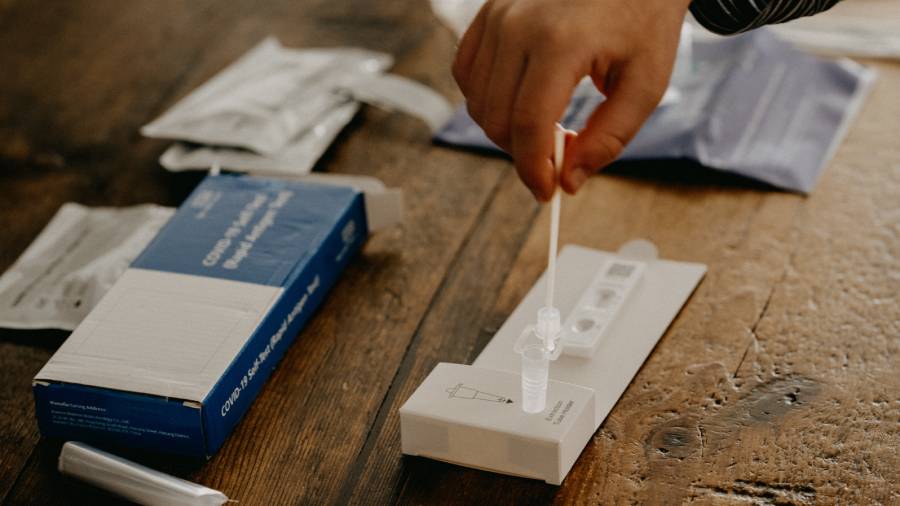
Frontline workers within the police, fire, Border Force and transport and freight systems services will be allowed to take part in a daily testing scheme to avoid further staff shortages.
The Government has announced it will be rolling out further targeted daily contact testing in England to frontline workers.
This comes as recent statistics revealed over half a million people (618,903) were “pinged” by the NHS Test and Trace App between 8th-15th July, causing significant disruption to key services as staff were forced to self-isolate.
As such, up to 200 new testing sites are expected to be set up and allocated for key frontline workers.

This involves staff within the police and fire services as well as Border Force staff and transportation workers, including rail infrastructure, ports and airports, and haulage firms.
This system, the Government has argued, will allow eligible workers to continue working if they test negative.
Employers and workers taking part in Daily Contact Testing will be provided with guidance about the protocols they must follow.
Throughout the pandemic, our frontline emergency services have continued to keep us all safe, overcoming enormous challenges to do so, while workers across the transport network have kept the country moving.
As we learn to live with the virus, we must do everything we can to break chains of transmission and stop the spread of the virus. Daily contact testing of workers in these critical sectors will help to minimise any disruption caused by rising cases in the coming weeks, while ensuring staff are not put at risk.
John Foster, CBI Director of Policy, reacted to the news:
If we want the economy to stay open, we need a confident but balanced plan.
We should bring forward the date from 16 August when those who have been double-jabbed no longer need to self-isolate if they test negative once contacted. We also need a test & release scheme for those who have not been double jabbed. And we should use testing and Covid safety measures to promote a culture of safety and mutuality in workplaces, shops, hospitality and public transport.
We need mass testing – not mass self-isolation – to tackle staff shortages. That’s why the government should be applauded for moving to a test and release scheme for the food industry to help relieve staff shortages. This is exactly the kind of agile response that firms need to build confidence in the reopening.
If the Daily Contact Testing scheme is deemed as a good, safe solution by the government, the next step must be to scale this up at pace. This scheme illustrates what it is to live with the virus.
From 16th August, double vaccinated people will no longer be legally required to self-isolate if they are identified as a close contact of a positive COVID-19 case.

Monica Sharma is an English Literature graduate from the University of Warwick. As Editor for HRreview, her particular interests in HR include issues concerning diversity, employment law and wellbeing in the workplace. Alongside this, she has written for student publications in both England and Canada. Monica has also presented her academic work concerning the relationship between legal systems, sexual harassment and racism at a university conference at the University of Western Ontario, Canada.
- Monica Sharma

- Monica Sharma
- Monica Sharma
- Monica Sharma








