

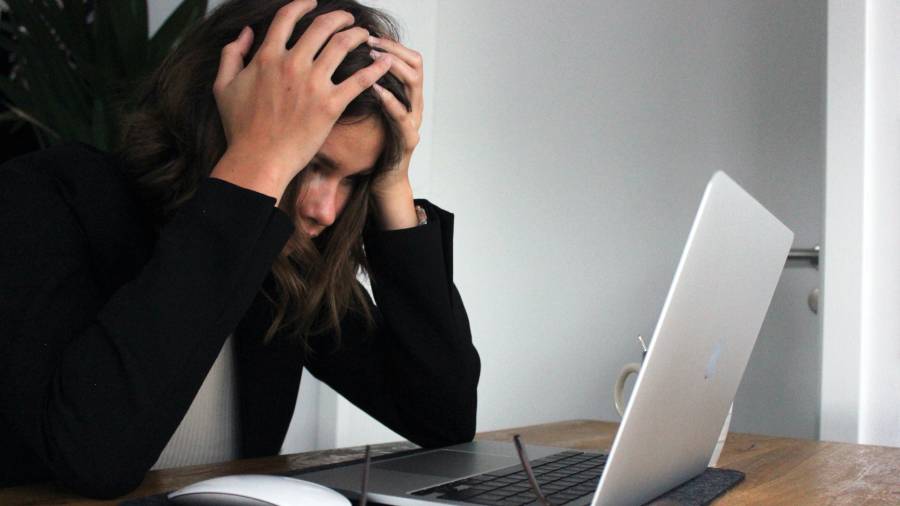
New research draws attention to how the COVID-19 pandemic has exacerbated the problem of hidden overtime and how this has negatively impacted people’s ability to disconnect from work.
A new report by Autonomy, an independent think-tank, reveals that the shift to remote working has led to significantly longer hours and negatively affected the mental health of staff.
A survey cited in the study, conducted by LinkedIn, showed that people working from home were working on average an extra 28 hours a month.
In addition to this, the number of meetings per person had risen by 12.9 per cent whilst the average working day had been extended by around 49 minutes each day.

As such, this had worrying repercussions on the mental and physical health of UK workers.
By the end of 2020, the prevalence of mental distress among workers was 49 per cent higher compared to 2017-19, and had increased across all major sectors apart from Agriculture, Forestry and Mining.
Furthermore, over half of respondents reported feeling more anxious since the start of the pandemic whilst a third were having trouble sleeping.
This “always on” culture was documented to lead to lower levels of employee engagement the next day and increase strain between employees and their families.
One of the most significant findings of the report shone a light on the gendered impact of hidden overtime – with women significantly more likely to experience mental distress as a result of this.
A study by Autonomy, Compass and the Four Day Week Campaign about overwork during the pandemic, found that at all stages of the crisis, negative mental health impacts have been disproportionately felt by women.
The study found that women are 43 per cent more likely to have increased their hours beyond a standard working week than men, and for those with children, this was even more clearly associated with mental distress.
Furthermore, the pandemic was also responsible for exacerbating childcare duties for many women.
Over four in five (86 per cent) women who undertake a standard working week alongside childcare, greater than or equal to the UK average, experienced mental distress during April 2020.
As such, the report calls for businesses to consider implementing a Right to Disconnect policy. This would allow staff to not routinely perform work outside normal working hours, to not be penalised for refusing to attend work matters outside of their routine hours and the duty to respect other people’s Right to Disconnect.
The report also states a Right to Disconnect law should function as an opt-out legal requirement, with a specific standard that applies to all firms and sectors, meaning that employers who wish to opt-out have to demonstrate good reason why the policy should not be implemented.
Nicky Hoyland, CEO of HR technology company, Huler, reacted to these findings:
Over the last 18 months many employees have to make a very sudden adjustment to remote working. With this adjustment has come a blurring of professional and personal lives with many feeling unable to escape digital tools and therefore unable to ‘switch off’.
Employers must make sure employees are at the centre of their decisions. They need to seek to understand the everyday experience of staff members and the changing needs they have that need to be met in order for them to stay engaged and properly fulfil their role. This will ensure employees are able to disconnect from work and a positive effect on their wellbeing and productivity.
*This research has been documented in Autonomy’s ‘The Right to Disconnect’ report.

Monica Sharma is an English Literature graduate from the University of Warwick. As Editor for HRreview, her particular interests in HR include issues concerning diversity, employment law and wellbeing in the workplace. Alongside this, she has written for student publications in both England and Canada. Monica has also presented her academic work concerning the relationship between legal systems, sexual harassment and racism at a university conference at the University of Western Ontario, Canada.
- Monica Sharma

- Monica Sharma
- Monica Sharma
- Monica Sharma








