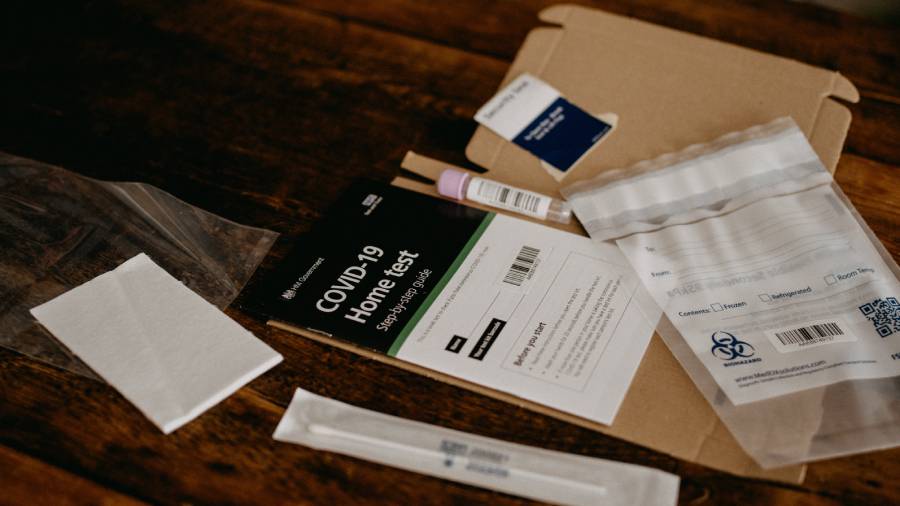
The Government’s COVID-19 testing programme has now been expanded to include rapid, lateral coronavirus tests which employees can use at home.
In an expansion of the scheme rolled out at the beginning of March, the Government has now announced that home testing kits will be made available for companies where on-site testing is not possible. This may be the case for firms who do not have adequate office space to carry out testing or because the company operates across multiple sites.
Employers who have over 10 workers will be eligible for this scheme and will order the tests online to distribute amongst their employees. Workers will be responsible for collecting the test from their employer with clear instructions about how to take the test.
As is the case for on-site testing, workers will have access to lateral flow tests which have the ability to detect coronavirus in 30 minutes. The Government has said this will allow swift detection of cases, meaning workers who test positive can isolate immediately which will break chains of transmission.

The Government has encouraged businesses to sign up before the 12th April in order to access free tests until the end of June, even if their premises are not yet open or are not able to start using the tests straight away.
In cases where employers have less than 10 employees, the Government encourages workers to access regular testing through the community testing programme which is now offered by all local authorities in England.
Furthermore, the Government have stated that they are currently working on allowing staff of small businesses to order tests online to be sent to their home.
Matthew Fell, CBI Chief UK Policy Director, called this testing an “essential pillar of the roadmap for reopening”. Mr. Fell continued:
Having the option for staff to test at home will enable more firms to embrace workplace testing, as not all employers will have the space or facilities to run testing programmes on their premises. The move to home testing reflects ongoing, high quality dialogue between business and government. We’d encourage as many firms as possible to register before the 12 April deadline, as part of their broader efforts to keep staff and customers safe.
Helen Dickinson, Chief Executive of the British Retail Consortium also welcomed this expansion of the scheme to include home testing:
This is something we have called for as the next step for smaller businesses and stores where the space for testing at work is limited. It is also supported by employees as a practical approach.
According to the Government, over 60,000 businesses have already registered for regular and rapid tests for employees. This is also happening alongside the vaccine rollout which has seen over 30 million people in the UK receive their first coronavirus vaccine.

Monica Sharma is an English Literature graduate from the University of Warwick. As Editor for HRreview, her particular interests in HR include issues concerning diversity, employment law and wellbeing in the workplace. Alongside this, she has written for student publications in both England and Canada. Monica has also presented her academic work concerning the relationship between legal systems, sexual harassment and racism at a university conference at the University of Western Ontario, Canada.
- Monica Sharma

- Monica Sharma
- Monica Sharma
- Monica Sharma