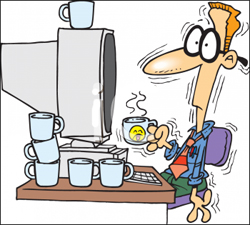
 Employees are the most important aspect of any organisation and the performance and productivity of employees is rooted in their environment.
According to the Health and Safety Executive (HSE), over three million workers in 2009/10 claimed that they suffered from ill health which, worryingly, they believed was work-related. So clearly employers need to understand this and ensure that a safe and healthy work environment is a top priority.
The Health and Safety at Work Act 1974 has a general requirement that companies provide a safe and healthy workplace, but employers also need to check any additional regulations such as The Health and Safety (Display Screen Equipment) Regulations 1992 which demands that an assessment of workstations and DSE equipment (also known as VDU or visual display units) be carried out wherever staff habitually use DSE as a normal part of their work.
Regardless of whether DSE is used, a workstation assessment is essential, which includes the desk area and the immediate environment such as seating, space and lighting.

So specifically, what are the potential health problems that can result from the working environment?
- Musculoskeletal disorders which affect muscles, nerves, joints and bones and cause upper limb disorders, back problems and repetitive strain injuries caused by things such as carrying, lifting and poor seated posture
- Tiredness and stress which can lead to mental health and physical illnesses
- Sore eyes from poor lighting, badly positioned computer screen or not taking regular breaks
- Headaches from screen glare or an uncomfortable office temperature.
The first step to a healthy working environment is to plan and carry out a risk assessment to pin down what the risks of the workplace are. Employers should talk to staff to find out any health issues, work towards a resolution and review at a later date. Addressing health and safety issues should not be a costly process – conversely the financial repercussions can be far worse with the possibility of fines, a loss of productivity or having to retrain replacement employees if others are forced to give up work, either permanently or temporarily, due to illness or injury.
Risk assessments and occupational health needn’t be a minefield as courses are available to help employers understand the policies and procedures involved in meeting their statutory requirements. Let us know how you ensure a safe and healthy workplace for your staff.

Richard Evens, Commercial Training Director, St John Ambulance
Richard is Commercial Marketing Director at St John Ambulance, the nation's leading first aid organisation and market leader in workplace first aid training. Responsible for training programmes and educational standards, Richard has been involved in consultation with the HSE since the early development of new guidance for the content and structure of workplace first aid training. He has liaised widely with the HSE and other stakeholders to apply the collective expertise in first aid to the new guidance, becoming a board member of the First Aid at Work Council which was created during this process.
Before joining the charity sector 10 years ago in a retail development role for Oxfam, Richard worked in marketing and logistical roles with Shell and Total Oil. He lives in north west London spending time with his family, trying to keep up with two energetic young children.
- Richard Evens

- Richard Evens

- Richard Evens
- Richard Evens