
Cycle to Work rule changes clear up problems

-

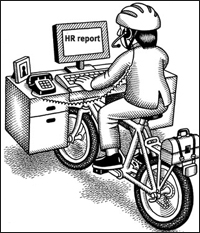
The Government has cleared up tax rules surrounding the Cycle to Work scheme, leading to more employers being able to offer the benefit to their workforce.

The Cycle to Work scheme allows employers to effectively loan cycles and cyclists’ safety equipment to employees as a tax-free benefit under salary-sacrifice arrangements.

Currently, bikes are sold to employees at the end of the hire period, usually 12 months, for their “fair market value” or secondhand price. This figure was widely taken as 5% of original value. New guidance from Her Majesty’s Revenue and Customs (HMRC) states that the 5% figure vastly undervalues most year-old bicycles and has tightened up its rules. The changes apply retrospectively as well as to bikes purchased via Cycle to Work in the future.

HRreview Logo

Get our essential weekday HR news and updates.

This field is for validation purposes and should be left unchanged.
Keep up with the latest in HR...
This field is hidden when viewing the form
Optin_date
This field is hidden when viewing the form


At the end of the hire period, participants can use a simplified valuation table issued by HMRC to calculate the value of the bike. For example, a cycle that costs £500 or less new will be worth 18% of that price one year on, 16% after 18 months, 13% after two years and almost nothing after five years.

Cyclists’ organisation CTC said the clarification would sweep away an area of uncertainty that was putting off employers from getting into the scheme in the first place.

Critics argue that this will make the Cycle to Work scheme less attractive to participants, a point HMRC denies. In a statement it said: “The Cycle to Work scheme is a very generous tax break and remains so.

After consultation with employer representatives we have provided a guide to what constitutes an acceptable price for a bike being sold to an employee to provide a simplified method for establishing the market value of the bike.

“There has been no change to the rules, if an employer passes a bike to a employee after its use under the cycle-to-work scheme at its full market value there is no tax charge.”

It will still be possible to argue that bikes are worth much less – for example if they are scratched or damaged – but employers would have to explain why the value was lower in their accounts.




Latest news

Grant Wyatt: AI is as good as the standard you set

Most professionals treat AI like a vending machine: they click, prompt, and hope. When the output is mediocre, they blame the tool.

AI adoption accelerates as employers rethink workforce size

Employers are using AI to address staffing pressures, redesign roles and improve productivity as workforce planning increasingly incorporates automation.

Workers ‘pushing through illness’ as workplace pressure grows

Burnout, stress and working while sick are becoming increasingly common as many employees struggle to cope with workplace pressure.

‘Job centre in your pocket’ plan raises questions over role of AI in employment support

The government's AI-powered employment assistant has sparked debate about how technology should support jobseekers while maintaining trust.
- Advertisement -

Employers urged to spot gambling harms during World Cup

Employers are being urged to watch for gambling-related harm at work as the 2026 World Cup brings weeks of daytime matches and betting activity.

Habits for health: small changes that lead to bigger gains

From walking meetings to better sleep routines, simple habits can improve health, wellbeing and performance across the workplace.

Must read

Pete Hykin: Is your workplace pension falling short?

Workplace pensions are arguably one of the best and most generous benefits a company can offer its employees, yet almost a decade on from the introduction of auto-enrolment, they’re falling seriously short, says Pete Hykin

Kate Palmer: What consequences does the CBI scandal have on leadership and reputation?

Is Danker’s dismissal an attempt to appease the public or a concerted effort to make the allegations plaguing the CBI simply disappear, asks Kate Palmer?
- Advertisement -

You might also likeRELATED
Recommended to you



