
A study analyzing a decades of workplace death data, as well as yearly salaries, claims to have uncovered which is the deadliest industry to work in – and how much you get paid for it.
The study, by First4Lawyers found:
- A total of 1267 people have died while at work in the UK since 2008
- Construction is the deadliest industry to work in killing 382 people in the last 10 year
- However Agriculture has killed the most in Britain so far in 2017
- The average age for workplace deaths is just 48 years old
- Scotland is the unluckiest region killing the most amount of people at work
- Forget Friday 13th – Tuesday 9th has killed the most amount of people at work across Britain since 2008
The study used a decade’s worth of workplace death data to reveal that the construction industry is the deadliest, killing 382 people. Experts at First4Lawyers have analysed open data from the Health and Safety Executive, which looks at how many deaths have occurred in the workplace in the last 10 years from 2008 until now.

Construction – Britain’s deadliest industry

Although a total of 1267 people have died whilst at work since 2008, 382 of those were in the construction industry which is more than any other industry. However when you look at 2017 alone, agriculture has killed the most so far – a total of 16 people. Working in both service and agricultural industries is also pretty risky, accounting for 287 and 269 deaths respectively since 2008. The safest industry to work in is utilities!
When looking at the average salaries, working in the deadliest industry could earn you up to £36,702 a year. The data was taken from an analysis of over 1 million job ads by Adzuna, and reveals that construction workers get paid 35% above the average UK salary of £27,271, suggesting that perhaps it’s worth taking a risk for the extra danger money.
However, if you were to work as a farm worker in the deadliest industry of 2017 and the third deadliest industry overall, it may not be worth the risk for just £19,390 a year.
Average salary of each industry:
- Agriculture: £31,857 – Farm Manager: £35,113, Farm Worker: £19,390, Agricultural Technician: £25,374
- Construction: £36,702 – Building Site Manager: £42,041, Builder: £34,491, Scaffolder: £37,716, Brick Layer: £29,209
- Extractive: £40,162 Utilities: £37,678 – Oil and Gas Engineer: £30,584, Electrician: £34,439, Powerplant Engineer: £35,500
- Manufacturing: £31,832 – Manufacturing Engineer: £34,573, Machine Operator: £21,751, Warehouse Operative: £17,56
- Service: £30,597 – Police Officer: £31,000 (Payscale), Fireman: £32,447 (Payscale), Soldier: £28,346 (Adzuna)
- Water/Waste Management: £29,185 – Waste Operative: £26,176, Waste Management: £30,924, Recycling Operative: £19,863
(*Figures according to Adzuna on 28/09/2017 at 3pm, except Police Officer and Fireman which are from Payscale)
2011 saw the most deaths in construction (52 people), however since then we have seen a slight decrease due to health and safety regulation improvements. In 2016, 33 people died as a result of a workplace accident in the construction industry and 12 people have died so far in 2017.
Scotland is the unluckiest region for workplace deaths
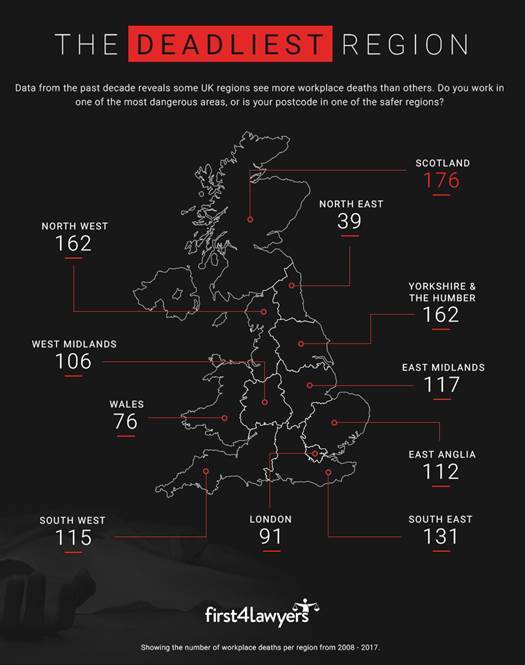
When breaking the data down by region, 176 deaths occurred in Scotland, which is the highest across Britain. 35% of workplace deaths in Scotland occurred in the agricultural industry, with 61 losing their lives at work in the last 10 years – making it the deadliest sector to work in for Scots.
When you consider that the average salary for a farm worker (£19,390) is 41% below the average UK salary, some many not think it worth the extra risk. However, farm managers can earn on average £31,000 in the UK, while an agricultural technician can command £25,274.
When it came to the luckiest region, the North East came out on top, with just 39 people dying because of a workplace accident. The majority of these (11) were in the agricultural industry.
Tuesday 9th unluckier than Friday 13th
Friday the 13th is widely considered the unluckiest day of the year in Western superstition. Scientifically known as paraskavedekatriaphobia, 21 million people suffer from a fear of Friday 13th, costing businesses up to £585m, from shunned air travel to people not going into work.
However, data analysis reveals there is not that much to worry about.
In fact, Tuesday 9th has proven to be the deadliest day of all. A total of 20 people have died on Tuesday 9th while at work, which is more than triple the amount on Friday 13th. In fact, just six people have died in the workplace on Friday 13th making it far less unlucky than many believe.
Andrew Cullwick, spokesperson for First4Lawyers, said:
“Although we have seen a slight decrease in workplace deaths across all industries, we expected to see a lot less. It’s quite shocking to see that still to this day workplace accidents are turning into deaths, and construction remains the most dangerous industry, despite so many health and safety regulations being introduced. With working practices constantly being improved, there is no excuse for companies not obeying the law and fulfilling their business obligations.”
Download the Full Study and Data Here

Paul Gray is an entrepreneur and digital publisher who creates online publications focused on solving problems, delivering news, and providing platforms for informed comment and debate. He is associated with HRZone and has built businesses in the HR and professional publishing sector. His work emphasizes creating industry-specific content platforms.
- Paul Gray

- Paul Gray
- Paul Gray
- Paul Gray