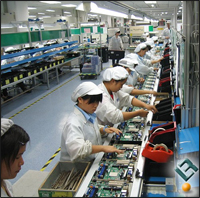
Manufacturers likely to turn to temporary labour

-

The UK manufacturing sector is likely to turn to temporary recruitment due to poor visibility on how the sector is likely to fare, according to Chris Williamson, director and chief economist at Markit.

The latest data from Chartered Institute of Purchasing and Supply (CIPS)/Markit shows UK industrial production was down 1.5% in the last quarter (March to June) compared to the previous three month period, with manufacturing down 0.2%.

Industrial production rose 0.9% in May, offsetting a 1.7% decline seen in April. Manufacturing saw a strong 1.8% rise in June, though this also needs to be looked at in the context of the 1.5% fall seen in April.

Williamson told Recruiter: “The rate of growth in manufacturing has cooled very significantly since earlier in the year. We were seeing good payroll growth then. Over the next few months what we are likely to see is firms becoming increasingly reluctant to take on extra staff. Those that they do take on, they will be tempted to take on as temporary or contract workers.

HRreview Logo

Get our essential weekday HR news and updates.

This field is for validation purposes and should be left unchanged.
Keep up with the latest in HR...
This field is hidden when viewing the form
Optin_date
This field is hidden when viewing the form


“Firms are operating under flexible conditions because there is uncertainty about the next 12 months. I think that despite AWR [Agency Workers Regulations] legislation, companies will continue to have workers on short-term contracts and see how the next few months go.

“There is so little clarity at the moment in terms of both domestic demand that they will be tempted to hold off hiring permanent employees, and if it means using staff for less than three months, then so be it.”


Latest news

Curtis Holmes: Payroll is the driver for employee engagement

Payroll has long been treated as a back-office necessity: essential, but not something that shapes culture or drives engagement. This no longer stands.

Labour market yet to show major AI impact on jobs, govt adviser says

A government economic adviser has challenged predictions of widespread AI-driven unemployment, arguing labour market data has yet to show disruption.

Young workers ‘pressured into signing NDAs after workplace injuries’

Workers say injuries are being hidden behind confidentiality agreements while financial pressures leave many afraid to challenge unsafe conditions.

CIPD recognises 30 HR leaders driving change across UK workplaces

The CIPD has unveiled its HR30 list for 2026, recognising senior people leaders whose work has delivered measurable impact across organisations and workforces.
- Advertisement -

Brits dream of being their own boss, but still cling to the monthly pay cheque, survey reveals

Britons say they like the idea of self-employment, but most still value the security and stability of traditional jobs.

AI Coaching Won’t Replace Managers. It Will Expose Coaching Debt.

As AI coaching expands, employers may gain a clearer view of where manager support is falling short.

Must read

Steve Herbert: HR & the economic outlook

In this article, Steve explores why the economic outlook matters to HR experts.

Robert Ordever: 7 Reasons to Show Appreciation

Are UK organisations doing a good enough job of appreciating their workers? Probably not, and yet there is now compelling evidence which proves that staff appreciation is not just a ‘fluffy HR thing’, but profoundly impacts the entire organisation, creating a competitive advantage.
- Advertisement -

You might also likeRELATED
Recommended to you